
Best Video Repurposing Tools for Multi-Platform Content in 2026
Quick answer
Quick answer
Learn how to evaluate tool categories by the work they remove, the outputs they support and the amount of manual cleanup they still require with a practical multi-platform

Table of contents
- 1. What to Get Right First
- 2. Step-by-Step Workflow
- 3. Common Mistakes to Avoid
- 4. Tool Categories Worth Comparing in 2026
- 5. Final Quality-Control Checklist
- 6. What 2026 Platform Rules Mean for Tool Selection
- 7. How This Fits a Multi-Platform Workflow
- 8. Related Reading
- 9. Frequently Asked Questions
- 10. Final Takeaway
Explore VidRango platform workflows
YouTube Video Optimizer
Prepare your source video for long-form YouTube publishing.
YouTube Shorts Video Maker
Create a platform-ready YouTube Shorts version.
Facebook Reels Video Maker
Prepare a dedicated Facebook Reels version.
Instagram Reels Video Maker
Turn your source into an Instagram Reels-ready output.
TikTok Video Maker
Prepare a vertical TikTok version from the same upload.
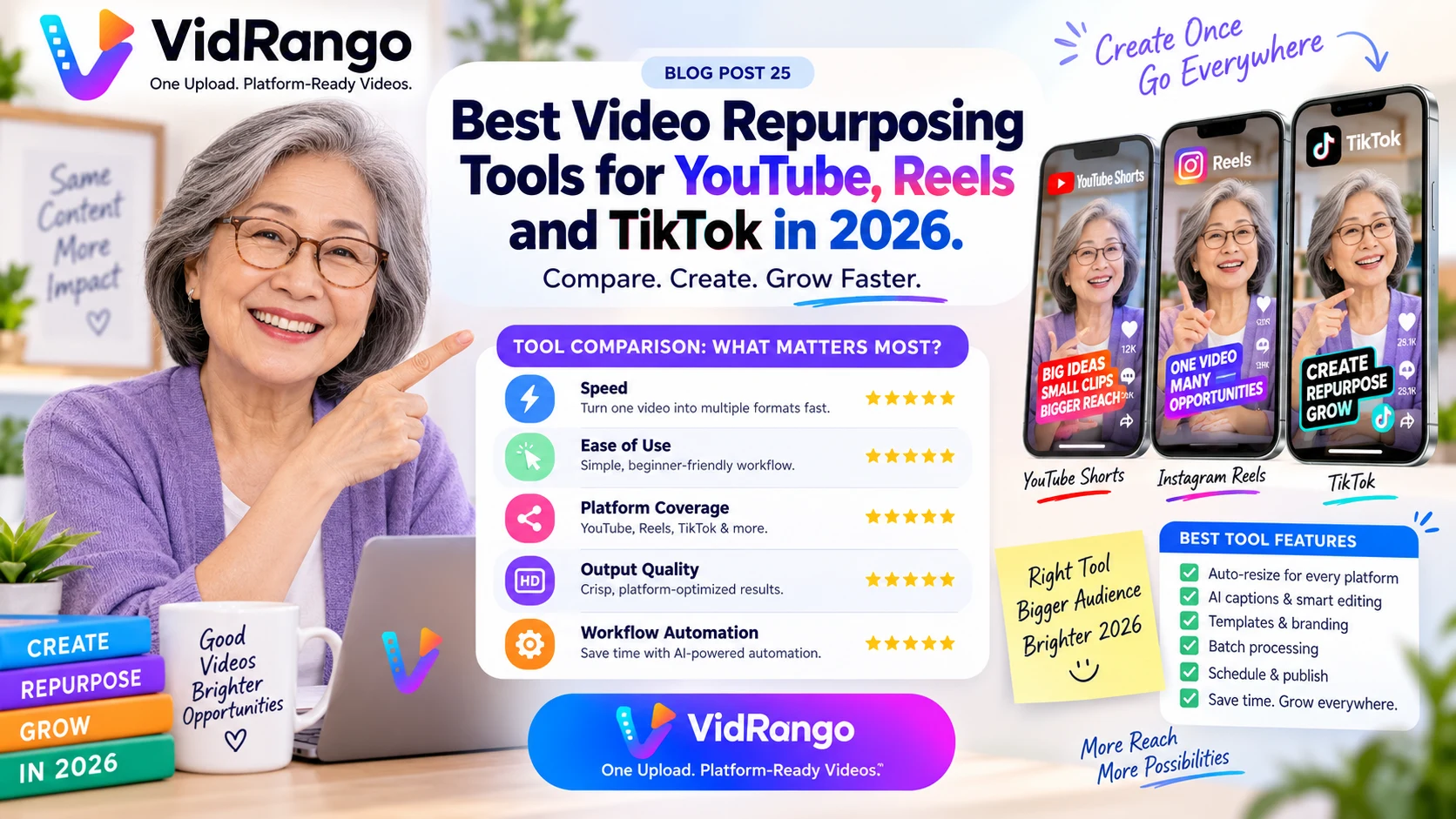
Best Video Repurposing Tools for Multi-Platform Content in 2026 is less about applying one universal preset and more about building a repeatable decision process. The practical goal is to evaluate tool categories by the work they remove, the outputs they support and the amount of manual cleanup they still require. When that process is consistent, the same source can be prepared for more than one destination without turning every export into a separate editing project.
This guide focuses on the practical process behind best video repurposing tools 2026: what to check first, how to work through the file, which mistakes create avoidable rework, and how to finish with a version that is easier to publish confidently.
What to Get Right First
Before you render anything, decide what must remain unchanged and what is allowed to adapt. For this topic, the most important checkpoints are:
- Compare full-video preparation with clip-first workflows. Treat this as a deliberate checkpoint rather than something to notice after export.
- Check which target platforms and aspect ratios are supported. Treat this as a deliberate checkpoint rather than something to notice after export.
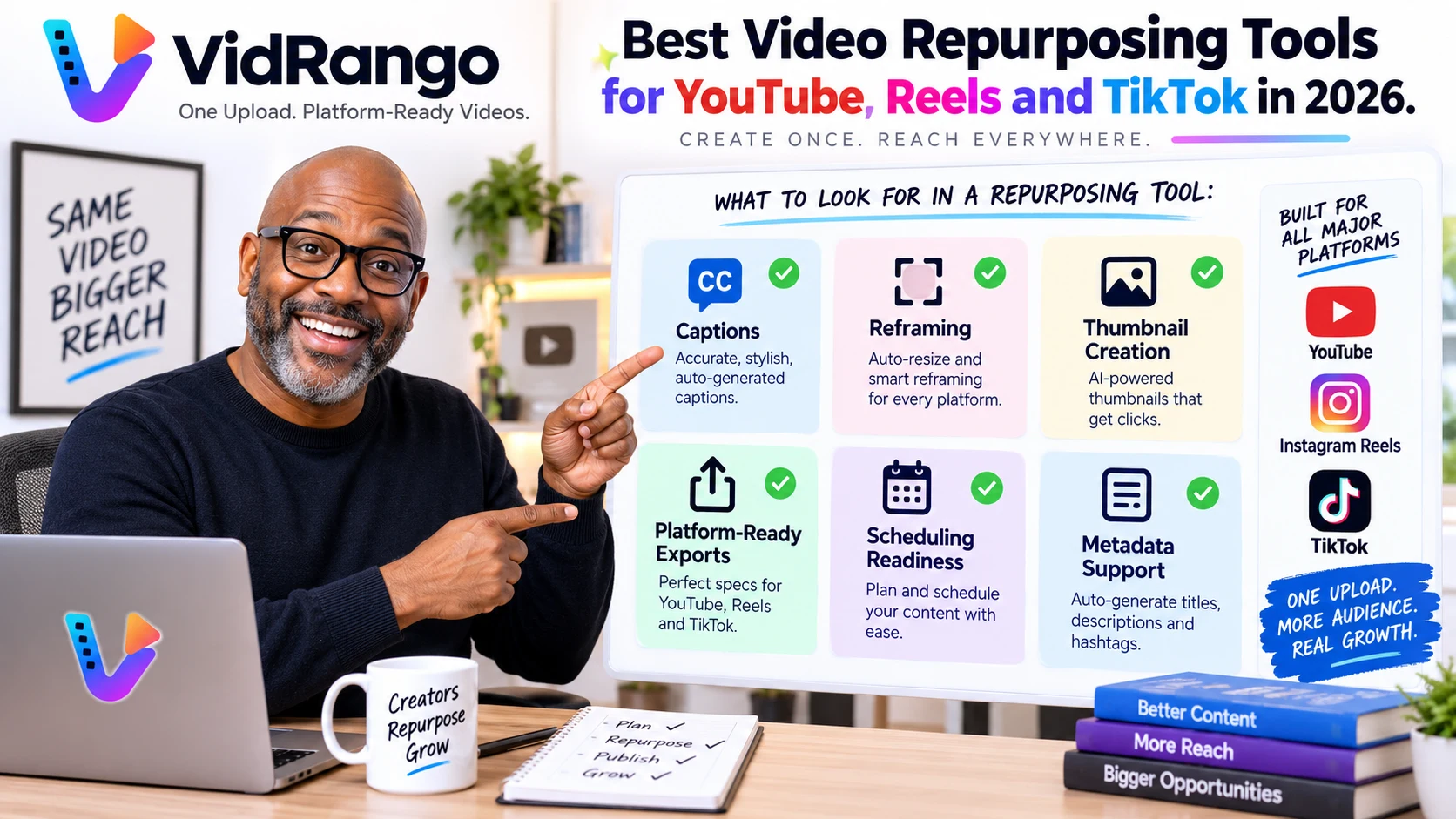
- Look for caption, reframing, audio and branding controls. Treat this as a deliberate checkpoint rather than something to notice after export.
- Evaluate export quality and version management. Treat this as a deliberate checkpoint rather than something to notice after export.
- Review pricing against actual time saved rather than feature count alone. Treat this as a deliberate checkpoint rather than something to notice after export.
- Test the workflow with your own source footage before committing. Treat this as a deliberate checkpoint rather than something to notice after export.
These checkpoints work together. A technically correct export can still feel wrong if the subject is poorly framed, the captions are hard to read, the audio is inconsistent, or the final file is confused with another platform version.
Step-by-Step Workflow
Step 1: Compare full-video preparation with clip-first workflows
Make this decision before moving to the next stage. The purpose is not to add more processing; it is to protect the viewer-facing result while keeping the workflow easy to repeat. After applying the change, compare it against the approved source so you can spot accidental cropping, quality loss, timing changes or visual clutter early.
Step 2: Check which target platforms and aspect ratios are supported
Make this decision before moving to the next stage. The purpose is not to add more processing; it is to protect the viewer-facing result while keeping the workflow easy to repeat. After applying the change, compare it against the approved source so you can spot accidental cropping, quality loss, timing changes or visual clutter early.
Step 3: Look for caption, reframing, audio and branding controls
Make this decision before moving to the next stage. The purpose is not to add more processing; it is to protect the viewer-facing result while keeping the workflow easy to repeat. After applying the change, compare it against the approved source so you can spot accidental cropping, quality loss, timing changes or visual clutter early.
Step 4: Evaluate export quality and version management
Make this decision before moving to the next stage. The purpose is not to add more processing; it is to protect the viewer-facing result while keeping the workflow easy to repeat. After applying the change, compare it against the approved source so you can spot accidental cropping, quality loss, timing changes or visual clutter early.
Step 5: Review pricing against actual time saved rather than feature count alone
Make this decision before moving to the next stage. The purpose is not to add more processing; it is to protect the viewer-facing result while keeping the workflow easy to repeat. After applying the change, compare it against the approved source so you can spot accidental cropping, quality loss, timing changes or visual clutter early.
Step 6: Test the workflow with your own source footage before committing
Make this decision before moving to the next stage. The purpose is not to add more processing; it is to protect the viewer-facing result while keeping the workflow easy to repeat. After applying the change, compare it against the approved source so you can spot accidental cropping, quality loss, timing changes or visual clutter early.
Once the steps are complete, export a final candidate and watch it from beginning to end. Check it at normal viewing size on a phone or laptop, because small previews can hide problems that become obvious in the real feed.
Common Mistakes to Avoid
- Choosing by feature list without testing output quality. This usually creates a problem that is faster to prevent than to repair after publishing.
- Paying for clip extraction when you need full-video versions. This usually creates a problem that is faster to prevent than to repair after publishing.
- Ignoring export limits or workflow friction. This usually creates a problem that is faster to prevent than to repair after publishing.
- Assuming the most automated option always needs zero review. This usually creates a problem that is faster to prevent than to repair after publishing.
The pattern behind most publishing mistakes is the same: a shortcut is applied globally even though the source changes from shot to shot or the destination changes from platform to platform. Build the workflow around reviewable stages instead.
Tool Categories Worth Comparing in 2026
- Full-video multi-platform repurposing tools. Use it as a practical evaluation point, not just a feature-box checkbox.
- Clip-first highlight extraction tools. Use it as a practical evaluation point, not just a feature-box checkbox.
- Manual timeline editors. Use it as a practical evaluation point, not just a feature-box checkbox.
- Caption and subtitle utilities. Use it as a practical evaluation point, not just a feature-box checkbox.
- Thumbnail and cover-design tools. Use it as a practical evaluation point, not just a feature-box checkbox.
- Publishing and scheduling tools. Use it as a practical evaluation point, not just a feature-box checkbox.
Final Quality-Control Checklist
- The correct source and latest revision were used.
- The target aspect ratio, framing and resolution are correct.
- Captions, text and logos stay clear of important visual content.
- Speech is understandable and background music does not compete with it.
- The cover, title and metadata match the actual video.
- The finished export was watched from start to finish before scheduling.
What 2026 Platform Rules Mean for Tool Selection
A useful repurposing tool should not assume that every destination is permanently defined by one aspect ratio, duration or safe-zone template. Current platform guidance already shows meaningful differences: YouTube Shorts classification depends on duration and orientation, Facebook's Reels model has broadened, and TikTok documents placement-dependent safe zones for ads.
When testing a tool, ask whether platform presets can evolve without forcing you to rebuild your source project. Reliability, export clarity and the ability to review each destination are more durable buying criteria than a long list of fashionable features.
Official references: YouTube Shorts, Facebook Reels, and TikTok in-feed specifications.
How This Fits a Multi-Platform Workflow
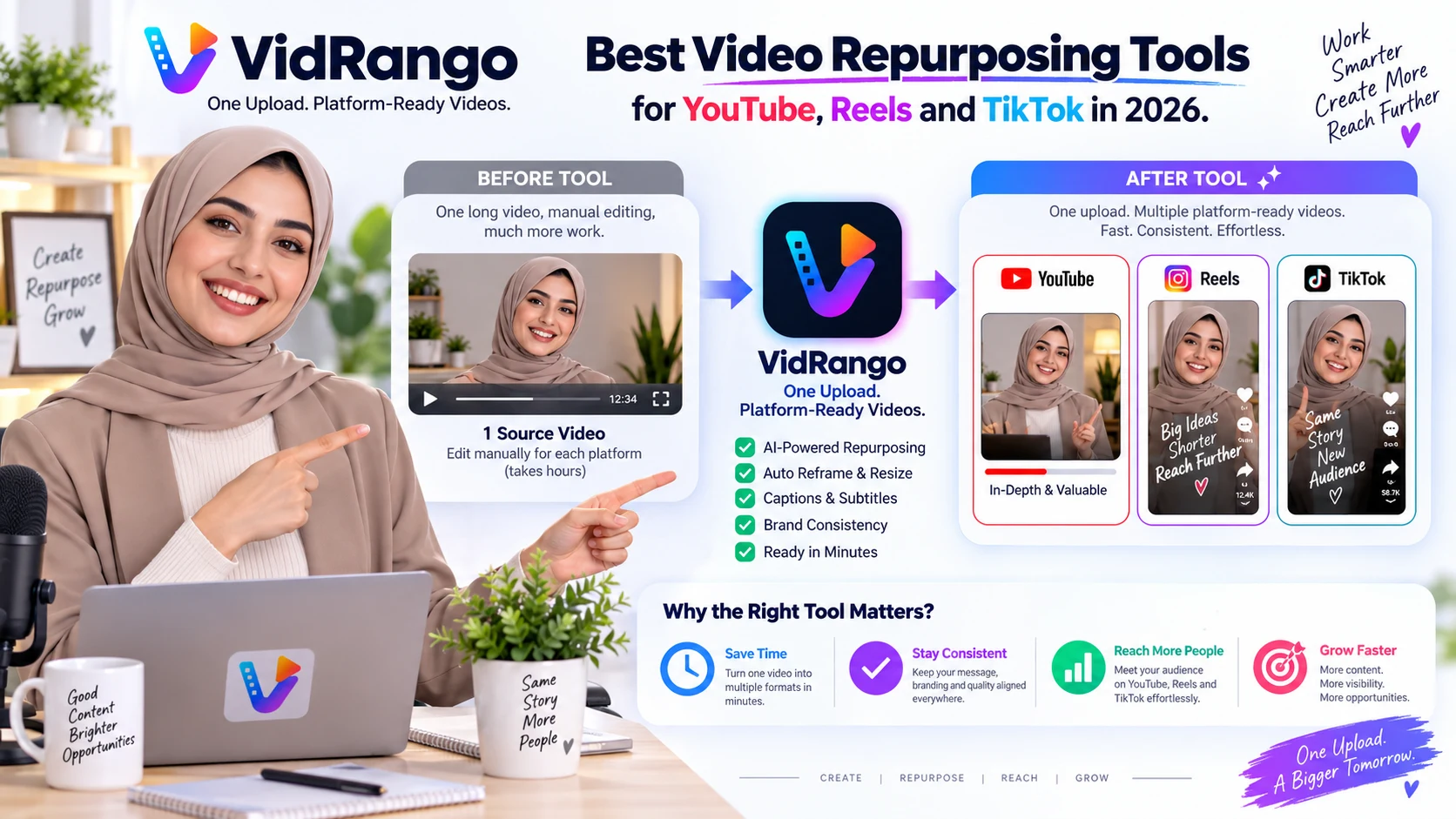
A good workflow for best video repurposing tools 2026 should reduce repeated manual work without removing the final review that protects quality. VidRango is designed around one source upload becoming separate platform-ready versions, with reframing, captions, audio, branding and publishing assets handled as connected stages rather than unrelated edits.
If you want to see the workflow in context, explore VidRango workflow options and compare them with the way you currently prepare each platform version.
Related Reading
Frequently Asked Questions
What is the best starting point?
Start with the highest-quality approved source and define the target output before changing anything. Then work through the visual, caption, audio and metadata checks in order so you can trace problems back to a specific stage.
Can one source video be used for multiple platforms?
Yes. The source can stay the same while framing, captions, covers, metadata and sometimes intro or outro treatment change by destination. The safest workflow keeps one approved master and creates clearly named platform versions from it.
How do I know the final version is ready to publish?
Watch the exported file from start to finish, not just the editing timeline. Confirm that the subject remains visible, captions are readable, audio is balanced, branding is unobtrusive and the selected file matches the intended platform.
Final Takeaway
The most reliable way to approach best video repurposing tools 2026 is to use a repeatable checklist instead of solving the same problems from scratch every time. Protect the source, adapt only what the destination requires, and make the final exported file—not the editing preview—the last approval point.
Keep exploring
Related VidRango guides and resources
How to Build a Repeatable Weekly Video Repurposing Workflow
Learn how to turn repurposing from an improvised editing task into a predictable weekly production system with a practical multi-platform workflow, quality-control steps and
Long-Form Video Metadata Checklist: Titles, Descriptions, Tags and Thumbnails
Learn how to package a long-form video so viewers and search systems can understand the topic before they watch with a practical multi-platform workflow, quality-control steps and
Vertical Video Publishing Checklist 2026: Format, Captions, Safe Zones and Metadata
Learn how to use a platform-neutral technical checklist before adapting the final details for each destination with a practical multi-platform workflow, quality-control steps and
Ready to simplify multi-platform publishing?
Upload One Video. Get Every Platform Version.
Prepare dedicated versions for YouTube, YouTube Shorts, Facebook Reels, Instagram Reels and TikTok through one VidRango workflow.